


TeeseMee - Live Video Chat
4.5476.00 Reviews
App Specs
- Version
- 1.5.6
- Updated On
- License
- Free
- Downloads
- 5,000,000+
- Developer
- Fierce Tiger Studio
- Categories
- Social
- Platform
- Android
Screenshots

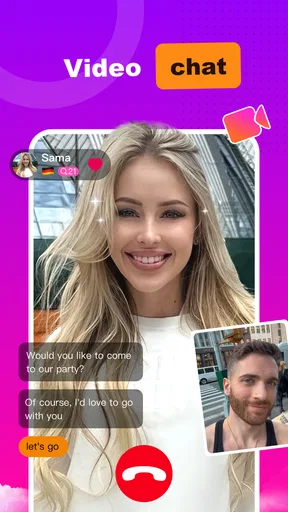


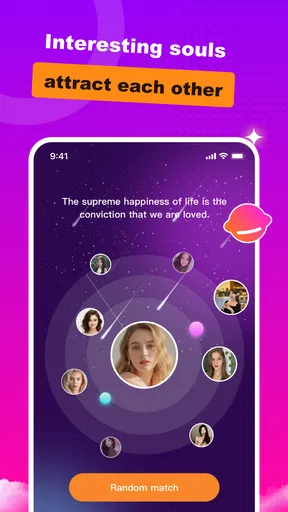
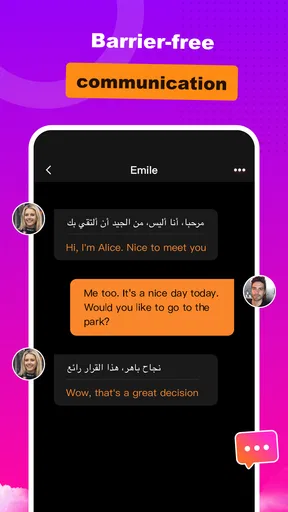
 Analysis by AppCompare
I approached TeeseMee as a social app for meeting unfamiliar people rather than as another traditional messaging tool. Its focus is direct interaction through global text and video chat, with a mature audience in mind. That makes the first few minutes important: you are not simply setting up a profile and waiting for familiar contacts, but deciding how openly you want to interact with strangers and how quickly you are comfortable moving from written conversation to a camera-based exchange.
My overall impression is that TeeseMee works best when I treat it as a lightweight discovery space, not as a replacement for a private messenger or a carefully moderated dating service. The experience can feel immediate and more personal than scrolling through static profiles, but that immediacy also means I need better boundaries. The app rewards a deliberate routine more than random tapping: check the basics, start with text, move to video only when the conversation earns that step, and leave quickly when the interaction feels uncomfortable.
How TeeseMee feels in everyday use
The baseline workflow is easy to understand. I open the app, look for a conversation, and use text or video depending on the situation. Text is the better starting point because it lets me judge whether someone is respectful before sharing more of my attention or appearing on camera. Video chat has a stronger sense of presence, but it also creates more pressure. A short written exchange can reveal whether the other person can hold a normal conversation, follows boundaries, and understands what I am looking for.
That distinction matters because the app’s appeal is built around strangers. With a normal social network, I usually begin with people I already know or with profiles connected to a wider identity. Here, the attraction is the possibility of a conversation outside my existing circle. The trade-off is that I have less context before replying. I would not use the first message as proof that someone is genuine, compatible, or safe. I use it only as a small signal that helps me decide whether to continue.
A realistic everyday use case would be a spare half hour in the evening when I want casual conversation with people from other places. I might begin with text while doing something else, keep the first exchange short, and switch to video only if both sides clearly want that. If the conversation becomes repetitive, sexual in a way I did not invite, or simply awkward, there is little value in forcing it. The fastest way to improve the experience is to treat leaving as a normal option rather than as a failure.
TeeseMee is free to install, which makes trying the basic experience straightforward. It also carries a Mature 17+ age rating, so I would not recommend it to younger users or to anyone who is uncomfortable with adult-oriented social interactions. That rating should shape expectations: this is not an app I would hand to a child for harmless random chatting, and parents should not assume that a social video environment is suitable simply because the download itself costs nothing.
The developer is Fierce Tiger Studio, and the app has built a sizeable audience. It has passed five million installs and holds a 4.5 average from roughly eighteen thousand ratings. Those figures suggest that the concept has found a real audience, but they do not remove the need for personal judgment. A large user base can make an app feel active while still producing very mixed individual conversations. I would judge it by the quality of the exchanges I actually receive, not by popularity alone.
Worth Reading Before You Choose

EA SPORTS FC Mobile 26 Is a Bigger Football Game, but It Takes Time

Flipboard Shows What News Apps Must Do Beyond the Feed

Switching to Android Auto Means Rethinking Your Driving Routine

Google Calendar Makes a Crowded Week Easier to Manage

Ludo King Makes the Most of the Minutes Between Plans

Baby Panda World Brings Quick Play to Modern Phones, but Its Game Library Feels Busy
The first habit: keep text as a filter
Experienced use starts with a simple rule: text first, video second. I find this more useful than trying to make every interaction feel exciting immediately. In text, I can ask a neutral question, notice whether the person answers it, and see whether the conversation is mutual. Someone who ignores every question and pushes straight toward video is giving me useful information, even if the app itself does not make that judgment for me.
I also avoid placing personal details in the opening messages. That includes my exact location, workplace, daily route, and anything that could identify where I live. A broad interest or general time zone is enough to begin. If the other person is worth knowing, the conversation will survive without a full biography in the first few minutes.
When I do try video, I use a neutral setting and keep the camera frame limited. That is not about making the interaction formal; it is about controlling what I reveal. A clean background, headphones if needed, and a quiet place make it easier to focus on the conversation. I would also avoid treating a video call as verification. Seeing a face proves only that a camera connection exists at that moment, not that the person’s identity or intentions are what they claim.
Settings and choices worth checking before chatting
Before spending time in conversations, I would review every visible privacy, notification, camera, microphone, and account option available in the current version. The exact labels can change, but the principle is stable: only enable what supports the way I actually plan to use the app. If I want occasional text conversations, there is no reason to make constant alerts part of my day. Reducing interruptions also makes it easier to respond when I am genuinely available instead of replying out of habit.
Camera and microphone access deserve special attention. I would grant them only when I am ready to use video or voice-related interaction, and I would check the phone’s system controls if I stop using those functions. This is a practical habit, not a sign that the app is automatically unsafe. Any social app involving live communication deserves the same care because the device’s camera and microphone are more intimate than a text box.
In-app purchases are another point to understand early. TeeseMee is free, but optional purchases range from $0.99 to $99.99 per item. I would not spend simply because a conversation feels promising or because an on-screen option creates urgency. First I would use the free experience long enough to decide whether the people, pace, and interaction style suit me. If I ever choose to buy something, I would set a personal limit before opening the payment screen and confirm what the item does rather than assuming it guarantees better conversations.
This is one of the app’s important trade-offs. A free entry point lowers the barrier to trying it, while the presence of purchases means the social experience may include reasons to spend. I prefer to separate the two decisions: “Do I enjoy using this?” comes first, and “Is a particular purchase worth it?” comes much later. That approach prevents a disappointing chat from turning into an expensive attempt to improve an experience that may simply not fit me.
Faster patterns that make casual use less tiring
My most useful shortcut is to decide the purpose of a session before I begin. If I want a quick conversation, I keep the opening simple and leave after a natural stopping point. If I am hoping to meet someone with a shared interest, I mention that interest early instead of exchanging empty greetings for several minutes. This makes the app feel less random without pretending that every match will become meaningful.
I also use a three-stage rhythm: a short introduction, one or two questions that require more than a yes-or-no answer, and a boundary check before video. For example, I might ask what brought the person to the app, what kind of conversation they prefer, and whether they are comfortable staying with text for a while. The point is not to conduct an interview. It is to create a repeatable way to notice reciprocity and respect before investing more time.
Another useful pattern is to avoid answering every incoming request immediately. I can read the opening message, decide whether it is relevant, and respond when I have enough attention for a real exchange. This reduces the feeling of being pulled from one stranger to another. It also helps me notice which conversations I choose because they interest me and which ones I accept only because a notification appeared.
For video, I prefer short first calls rather than leaving the camera open indefinitely. A brief conversation gives both people a chance to decide whether the connection feels natural. If it does, I can continue; if it does not, ending politely is easier after a limited trial. I would never let embarrassment pressure me into staying on camera. The app is meant to support interaction, not to remove my ability to choose when it ends.
These habits are especially helpful because global social apps can produce very different communication styles in quick succession. Some people want language practice, some want flirtation, some want casual entertainment, and others may be trying to move the interaction somewhere I do not want to go. I cannot control the mix completely, but I can make my own purpose clear and filter more efficiently.
Where it compares well with familiar alternatives
Compared with a standard text messenger, TeeseMee is better suited to meeting people outside an existing contact list. A messenger is usually strongest when I already know whom I want to reach, while this app makes discovery the starting point. The benefit is novelty; the cost is less context and a greater need to manage boundaries.
Compared with a conventional social network, the experience feels more immediate because text and video are central rather than secondary to a feed. I do not need to spend a long time building a public timeline before attempting a conversation. On the other hand, a conventional network may offer more persistent identity signals, established connections, and ways to judge someone over time. If my priority is community, long-term content, or dependable contact history, I would probably prefer that kind of platform.
Compared with a dedicated dating service, TeeseMee appears more open-ended. That can be appealing when I want international conversation without committing to a formal matching process. It can also be frustrating if I want clear relationship intentions, detailed compatibility tools, or a structured path toward meeting someone. I would not choose this app expecting the same level of purpose that a specialized dating product is designed to provide.
The video element is its clearest point of difference from ordinary chat rooms. A live call can reduce the distance between strangers and make a good conversation feel more natural. Yet it also magnifies poor behavior. In text, I can ignore a message and continue my day; in video, an unwanted interaction is more intrusive. That is why I consider the app strongest for users who are comfortable making quick decisions and ending contact without overexplaining.
Advanced limits that experienced users should accept
No workflow can guarantee that every conversation will be worthwhile. Random social discovery naturally includes mismatched expectations, repetitive openings, language barriers, and people who are less respectful than they first appear. I would not interpret a quiet session as proof that the app is broken, nor would I assume that a busy session is automatically a good one. The value depends on whether the available conversations match my reason for opening it.
I also would not use live video as a substitute for trust. A person can be charming, appear familiar, or create a strong connection quickly while still remaining a stranger. I keep sensitive subjects private until trust develops outside the initial interaction, and I avoid sending money, intimate material, or account credentials. Those precautions are particularly important in a service built around meeting people I do not already know.
There is a practical emotional limit, too. Rapidly moving between unfamiliar people can become tiring, especially when several conversations demand attention at once. If I notice myself replying mechanically or becoming irritated by every new message, I stop for the day. A social app should add a little connection or curiosity, not turn free time into an obligation to manage strangers.
The current version is 1.5.4 and supports devices running Android 7.0 or later. That makes it accessible across a broad range of Android phones, although the quality of a video conversation will still depend on the device, connection, lighting, and surrounding noise. I would test the basic text experience first on an older phone and avoid judging the entire app from one poor call in a weak-signal location.
One limitation I would keep in mind is that the store summary presents a broad promise: global text and video chat with a hookup-oriented angle. That wording leaves room for different interpretations. Some users may be looking for friendship or language exchange, while others may expect flirtation or adult conversation. I would state my own intention early and leave when the other person wants something fundamentally different. Clear expectations cannot eliminate mismatches, but they make them easier to identify.
Who should try it, and who should skip it
I think TeeseMee is a reasonable choice for an adult who enjoys spontaneous conversation, is curious about people from different places, and is comfortable controlling the pace of contact. It is also a good fit for someone who prefers trying text before deciding whether a video call feels worthwhile. The free starting point makes experimentation simple, provided I keep purchases optional rather than treating them as part of the basic requirement.
I would skip it if I need a tightly managed community, a strong identity system, or a clear professional purpose. It is also a poor match for anyone who dislikes unexpected social attention or feels pressured by live video. Users seeking a carefully structured dating process may get better results from a dedicated dating app, while people who only want to message friends should stay with a conventional messenger.
For privacy-sensitive users, the decision depends on discipline. I can reduce exposure by limiting personal details, controlling device permissions, starting with text, and ending interactions quickly. But if the idea of speaking with unknown people on camera is uncomfortable even with those precautions, there is no reason to force the fit. The app’s main feature is also the source of its greatest pressure.
My final view after building a repeatable routine
TeeseMee - Live Video Chat is most enjoyable when I use it with a plan. I begin with text, look for mutual effort, check my comfort level before video, and treat every purchase as optional. That routine turns a potentially chaotic stream of stranger interactions into something I can manage on my own terms.
Its strongest quality is immediacy: I can move from curiosity to a real conversation without first constructing a large public profile or waiting for an established connection. Its main weakness is the same openness. The quality and tone of interactions can vary sharply, and the video format makes poor matches more demanding than ordinary messages.
With its 4.5 average and audience of more than five million installs, the app is clearly not an obscure experiment, but popularity is not a substitute for fit. I would recommend it to mature users who want casual global conversation and are willing to use firm boundaries. I would not recommend it as a guaranteed route to romance, friendship, or trustworthy identity. Use TeeseMee as a controlled way to explore conversations, not as permission to lower your standards.
Pros
- Quickly meet new people through one-to-one live video chats.
- Video interaction feels more personal than text-based messaging.
- Simple interface makes starting a conversation easy.
- Useful for practicing communication with people from different backgrounds.
- Live matching keeps conversations spontaneous and engaging.
Cons
- Some matches may be unavailable depending on your location.
- Video quality can vary with network speed and device performance.
- You may encounter users with very different conversation styles.
- Live video chat can consume significant mobile data and battery.
- Privacy settings should be checked carefully before sharing personal details.
FAQs for TeeseMee - Live Video Chat
What is TeeseMee - Live Video Chat used for?
TeeseMee - Live Video Chat is designed for meeting and communicating with people through live video conversations. After creating an account, users can typically browse available profiles, start chats, and interact in real time. The app focuses on social discovery and video communication, so it may be suitable for users who prefer face-to-face conversations instead of text-only messaging. Availability of specific features can depend on location, account status, and app updates.
Is TeeseMee - Live Video Chat free to download and use?
The application may be available to download at no initial cost, but some communication features can require in-app purchases, credits, subscriptions, or other paid options. Before starting a video chat, carefully review the pricing information shown inside the app, especially if calls, gifts, or extended interactions use virtual currency. Check the Google Play Store or Apple App Store listing for the latest details because prices, trial periods, and available plans may change.
Do I need to create an account to use TeeseMee?
Most live video chat services require users to register or sign in before they can access the main communication tools. TeeseMee may request information such as an email address, phone number, username, date of birth, or profile photo, depending on its current registration process. Read the privacy policy before submitting personal details, and use a strong, unique password. Avoid sharing sensitive information with other users during conversations.
Is TeeseMee - Live Video Chat safe for everyone?
Users should treat TeeseMee as an adult-oriented social communication environment unless the official store listing clearly states otherwise. Live video platforms can include conversations or profiles that are unsuitable for children, and not every interaction can be predicted in advance. Use the app only if you meet its age requirement, enable available privacy settings, and block or report suspicious behavior. Never send money, personal documents, passwords, or private contact information to strangers.
What should I do if I experience inappropriate behavior or technical problems?
If another user behaves abusively, sends unwanted content, or pressures you to share personal information, end the conversation and use the app’s block and report tools if available. Keep evidence such as screenshots when appropriate, but do not continue engaging with the person. For login failures, camera or microphone issues, crashes, or payment problems, update the app, check device permissions and internet connectivity, then contact the developer through the official support channel.


